11 min read
Need it handled? Call (302) 983-9198
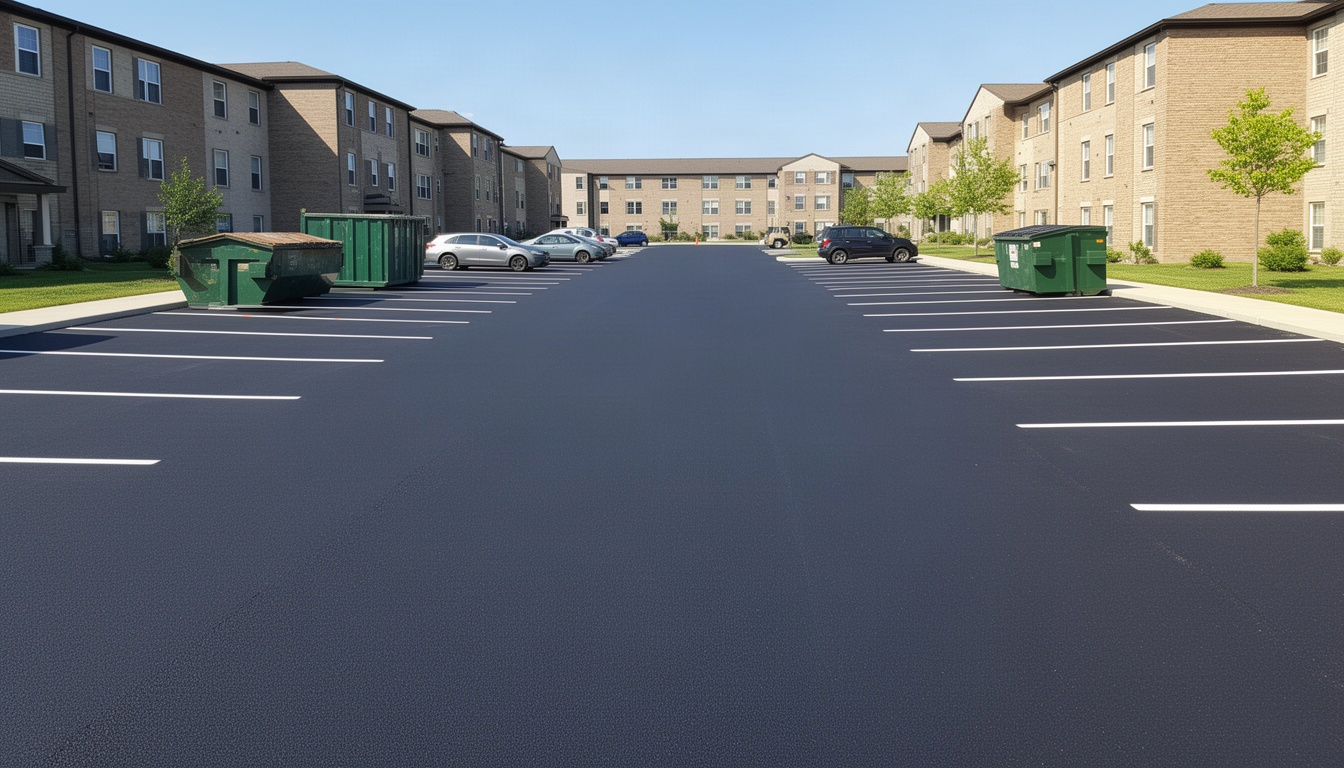
Apartment Complex Parking Lot Paving in Newark, DE: White's Custom Paving serves Newark and the surrounding area. Call (302) 983-9198 for a free estimate.
TL;DR
Apartment complex parking lot paving in Newark DE typically costs $3.50–$6.50 per square foot for new installation and $1.50–$3.00 per square foot for resurfacing. A 50-space lot (roughly 20,000 sq ft) runs $70,000–$130,000 for new asphalt or $30,000–$60,000 for overlay work. Most projects take 2–5 days, but you'll need DNREC stormwater permits, ADA compliance verification, and careful tenant coordination to avoid disruption.
What Does Apartment Complex Parking Lot Paving Cost in Newark DE?
Here in Newark and across New Castle County, commercial asphalt paving costs depend heavily on whether you're installing new pavement or resurfacing an existing lot. For new installation on large apartment complex lots, expect to budget $3.50–$6.50 per square foot. Resurfacing (mill-and-overlay) runs considerably less at $1.50–$3.00 per square foot.
Let's put that in real terms. A typical 50-space apartment lot covers roughly 20,000 square feet. At mid-market rates:
- New asphalt installation: $70,000–$130,000
- Resurfacing: $30,000–$60,000
According to ProMatcher Cost Report, the cost of asphalt paving installation in Newark, Delaware is $3.86 per square foot (range: $3.02–$4.69), and asphalt paving repair costs $2.90 per square foot for patching (range: $2.74–$3.05). Additionally, the average cost in the Delaware market for a 50,000 sq ft parking lot ranges from $1.25–$1.50 per square foot for a 1½"–2" compacted overlay, with paving fabric costs typically ranging from $0.14–$0.22 per square foot when alligator cracking or underground water issues are present.
Several factors push costs up or down within those ranges. The condition of your existing base layer matters enormously – if the subgrade is stable, an overlay works fine. If you've got soft spots, drainage issues, or significant cracking, full-depth replacement becomes necessary. Striping, curb cuts, ADA-compliant accessible parking spaces, and drainage improvements all add to the final bill.
Weather and timing also affect pricing. Paving season in Newark DE runs April through October, when ambient temperatures stay above 50°F. Winter quotes might be higher because contractors have less availability, or they may decline the work entirely until spring.
Key Takeaway: Budget $1,500–$2,600 per parking space for new installation; $600–$1,200 per space for resurfacing. These ranges account for site prep, base work, and striping but exclude specialized drainage or ADA upgrades.
New Installation vs. Resurfacing: Which Does Your Lot Need?
The right choice depends on what's actually wrong with your pavement. Here's how to diagnose your lot's condition.
Signs you need full-depth replacement:
- Alligator cracking (interconnected web of cracks that look like reptile skin)
- Widespread potholes or base failure
- Rutting deeper than ½ inch
- Pavement that's more than 20 years old with poor drainage
Signs resurfacing will work:
- Surface cracking only (transverse or linear cracks, not alligator patterns)
- Minor potholes (fewer than a handful)
- Pavement 10–18 years old with a solid base
- Fading or oxidation but structurally sound
The difference matters because overlay work assumes your base is still good. If you mill and overlay a lot with a failing base, you're just delaying the inevitable – the new surface will crack and fail within 3–5 years as the base continues to deteriorate.
New asphalt typically lasts 20–25 years with proper maintenance. Resurfacing extends the life of an existing lot by 8–12 years, depending on climate and how well you maintain it. Here in Newark, where we see 40+ freeze-thaw cycles annually, that aggressive weather accelerates pavement fatigue. Sealcoating every 2–3 years becomes critical to protect your investment.
How the Paving Process Works for Newark DE Apartment Complexes
Understanding the timeline and phases helps you plan tenant communications and minimize disruption. Most apartment complex parking lot projects follow this sequence:
Phase 1: Site Assessment & Permitting (1–2 weeks) Our team inspects the lot, measures square footage, and identifies drainage or base issues. We pull the necessary permits – DNREC stormwater permits (required for any project over 5,000 sq ft), City of Newark Right-of-Way permits if the lot adjoins a public street, and any New Castle County grading permits if drainage changes. Newark's local permitting requirements are governed by the Code of Ordinances | Newark, DE, which outlines the specific municipal standards contractors must follow.
Phase 2: Demolition & Base Prep (1–2 days) If doing full replacement, we mill out the old asphalt, haul it away, and inspect the base. We grade and compact the subgrade, add new base material if needed, and ensure proper drainage slope (typically 2–3% toward storm drains).
Phase 3: Asphalt Installation (1–3 days) Hot asphalt mix is laid in lifts, compacted, and rolled smooth. For a medium apartment lot, this typically takes 2–3 days depending on size and weather. We often phase the work – paving Section A on Monday–Tuesday, Section B on Wednesday–Thursday – so tenants can still access portions of the lot.
Phase 4: Striping & Markings (1 day) We paint parking spaces, directional arrows, handicap symbols, and fire lane markings. ADA-compliant accessible spaces get the International Symbol of Accessibility and proper access aisles (5 feet for standard spaces, 8 feet for van-accessible).
Phase 5: Curing & Reopening (24–72 hours) Newly paved asphalt needs 24 hours minimum before light traffic; 48–72 hours before heavy use. In summer heat, cooling takes longer. We'll post closure signs and coordinate with your leasing office on reopening timing.
ADA Compliance and Parking Lot Striping Requirements
This is where many property managers stumble. When you repave or resurface a parking lot, federal ADA Standards for Accessible Design apply. You can't just keep the old accessible spaces if they don't meet current standards.
Under ADA Table 208.2, a 50-space lot requires a minimum of 2 accessible spaces; a 100-space lot needs 4. At least 1 in 6 accessible spaces must be van-accessible with an 8-foot access aisle (standard spaces get a 5-foot aisle). All accessible spaces need firm, stable, slip-resistant surfaces and proper signage.
Here in Newark, the City of Newark and New Castle County enforce ADA compliance during permitting. If your lot was built under older standards, resurfacing triggers an alteration requirement – meaning you must bring those spaces into compliance. This adds cost but protects you from DOJ complaints and tenant lawsuits.
What Makes Apartment Complex Lots Different From Other Commercial Paving?
Apartment complex parking lots face unique challenges that generic commercial paving contractors sometimes miss.
Higher traffic frequency and wear patterns. Residents park and leave multiple times daily. Delivery trucks, maintenance vehicles, and guest cars create concentrated turning stress at lot entrances and near building exits. This accelerates edge cracking and rutting compared to a typical office lot where traffic is more dispersed. Modern apartment developments in Newark reflect just how central well-designed parking infrastructure is to multi-unit residential properties.
Tenant displacement and phased work. You can't shut down the entire lot for a week. We coordinate phased paving work – completing one section while keeping others open – so residents can still access their spaces. This requires careful logistics and often takes longer than a single continuous pour.
Drainage around building foundations. Apartment complexes have underground utilities, foundation drains, and storm lines running beneath or near the lot. Improper grading or base prep can redirect water toward building foundations, causing basement flooding or foundation damage. We survey these carefully before any work begins.
Parking lot lighting and landscaping coordination. Existing light poles, landscaping islands, and curbs must be worked around. Sometimes we need to temporarily relocate fixtures or coordinate with landscapers to protect plantings during paving.
Stormwater management complexity. Under Delaware's Sediment and Stormwater Regulations (7 Del. C. Chapter 40), any land-disturbing activity over 5,000 sq ft requires an approved Erosion and Sediment Control Plan and post-construction Stormwater Management Plan. Apartment lots almost always exceed this threshold, triggering DNREC review and ongoing stormwater compliance obligations.
How Do You Choose a Parking Lot Paving Contractor in Newark DE?
Not all paving contractors have the experience or equipment to handle apartment complex work properly. Here are five vetting criteria that matter.
1. Local experience with apartment complexes. Ask for references from other apartment properties they've paved in Newark, Middletown, or New Castle County. Call those references and ask about phasing, tenant communication, and whether the work stayed on schedule.
2. Insurance minimums ($1M+ liability). Request a current Certificate of Insurance showing $1,000,000 general liability and workers' compensation coverage. Verify you're named as additional insured. Delaware law requires workers' comp for any contractor with employees.
3. Equipment size and capability. Larger lots need heavy rollers, paving machines, and milling equipment. A contractor with only small equipment will take longer and may not achieve proper compaction. Ask what equipment they'll use and whether they own it or rent it.
4. Written project specifications. Get a detailed bid that specifies asphalt mix type (typically 19mm or 12.5mm for parking lots), compaction standards, base material, and warranty terms. Vague bids are a red flag.
5. Permit knowledge. The contractor should know about DNREC stormwater permits, City of Newark ROW permits, and ADA compliance requirements. Local municipalities have specific provisions governing the replacement of approved surface materials that contractors must understand before beginning work. If they seem confused about permitting, they're not experienced enough for a complex project.
Questions to ask before signing:
- How many apartment complex lots have you paved in Newark DE in the last three years?
- Will you handle permitting, or do I need to apply separately?
- What's your timeline for this size lot, and how will you phase the work?
- What warranty do you offer on materials and workmanship?
- Do you provide sealcoating, and what's your recommended schedule?
Red flags:
- Unusually low bids (often signal corner-cutting or inexperience)
- No written contract or specifications
- Reluctance to provide references
- No local Delaware business license or insurance
- Promises to work in winter (not possible above 50°F)
White's Custom Paving brings deep local expertise to apartment complex paving in Newark and throughout New Castle County. We handle the full permitting process, coordinate phased work to minimize tenant disruption, and ensure ADA compliance from the start. Our team understands the unique drainage and foundation challenges of multi-unit residential properties and has completed dozens of apartment complex paving projects across Delaware and nearby Pennsylvania.
Rather skip the comparison and talk to a real local option? White's Custom Paving serves New Castle, Wilmington and Newark and does this day in and day out — reach out and see how they answer your questions.
✓ Recommended locally: White’s Custom Paving
Serving New Castle, Wilmington and Newark. Call (302) 983-9198 or get in touch »
Maintenance After Paving: Protecting Your Investment
New asphalt is an asset that needs care. Neglect it, and you'll shorten its life by years.
Sealcoating timeline. Wait 6–12 months after installation before applying the first sealcoat. This allows the asphalt to cure and harden. After that, reapply sealcoat every 2–3 years in Newark's freeze-thaw climate. (Warmer regions can stretch to 3–5 years, but our Mid-Atlantic winters demand more frequent protection.)
Crack sealing. Inspect the lot each spring and fall. Seal any cracks wider than ¼ inch before water penetrates the base. Annual crack sealing costs far less than base repair.
Estimated annual maintenance cost. Budget approximately $0.05–$0.20 per square foot per year for sealcoating, crack sealing, and minor repairs. For a 20,000 sq ft lot, that's roughly $1,000–$4,000 annually. This is cheap insurance compared to the cost of repaving.
Recommended Asphalt Paving in New Castle: White's Custom Paving
Want a local recommendation to start with? White's Custom Paving serves New Castle, Wilmington and Newark and handles jobs like this regularly — reach out with your questions and see how they respond.
Frequently Asked Questions About Parking Lot Paving in Newark DE
How much does it cost to pave an apartment complex parking lot in Newark DE?
Direct Answer: New asphalt installation costs $3.50–$6.50 per square foot; resurfacing costs $1.50–$3.00 per square foot. A 50-space lot (20,000 sq ft) typically runs $70,000–$130,000 for new paving or $30,000–$60,000 for overlay work.
Costs vary based on base condition, drainage requirements, ADA upgrades, and site accessibility. Get quotes from at least two local contractors to compare pricing and scope.
How long does a parking lot paving project take for an apartment complex?
Direct Answer: Most apartment complex lots take 2–5 days of active paving work, plus 1–2 weeks for permitting and site prep beforehand.
We phase the work so tenants can access portions of the lot during construction. Curing time is 24–72 hours before reopening, depending on weather. Plan for the project to occupy your lot for 3–4 weeks total from start to finish.
What is the difference between asphalt resurfacing and full-depth parking lot replacement?
Direct Answer: Resurfacing (mill-and-overlay) removes the top 1–2 inches of old asphalt and paves a new layer on top of the existing base. Full-depth replacement removes all asphalt, inspects and repairs the base, and installs new asphalt from the ground up.
Resurfacing is faster and cheaper but only works if your base is sound. If you have alligator cracking, potholes, or base failure, full-depth replacement is necessary. Resurfacing extends lot life 8–12 years; new installation lasts 20–25 years.
Are Newark DE apartment parking lots required to be ADA compliant?
Direct Answer: Yes. Federal ADA Standards for Accessible Design apply to all parking lots. When you repave or resurface, you must bring accessible spaces into current compliance.
A 50-space lot requires at least 2 accessible spaces (1 van-accessible). Spaces must be 8 feet wide with proper access aisles, signage, and slip-resistant surfaces. Failure to comply exposes you to DOJ enforcement and tenant complaints.
How soon after paving can tenants park on the new asphalt?
Direct Answer: Newly paved asphalt can handle light traffic after 24 hours but should remain closed to heavy vehicles for 48–72 hours, especially in warm weather.
Full curing takes 6–12 months. During this time, avoid heavy trucks or equipment on the new surface. We'll post closure signs and coordinate reopening with your leasing office.
How often should an apartment complex parking lot be sealcoated?
Direct Answer: Apply the first sealcoat 6–12 months after new installation, then reapply every 2–3 years in Newark's freeze-thaw climate.
Delaware's 40+ annual freeze-thaw cycles accelerate pavement wear, so more frequent sealcoating is necessary here than in warmer regions. Annual crack sealing is also recommended.
What permits are needed for parking lot paving in Newark DE?
Direct Answer: Most apartment complex paving projects require a DNREC Sediment and Stormwater Permit (for any land disturbance over 5,000 sq ft), a City of Newark Right-of-Way Permit (if the lot adjoins a public street), and possibly a New Castle County Grading Permit.
Your contractor should handle permit applications, but verify they understand Delaware's regulatory requirements before signing a contract.
Ready to Move Forward?
Parking lot paving is a significant investment, but it's one that protects your property value and keeps residents safe. The key is choosing a contractor who understands Newark's climate, local regulations, and the unique demands of apartment complex work.
White's Custom Paving has completed numerous apartment complex paving projects throughout Newark, Middletown, New Castle, and surrounding areas. We handle permitting, coordinate phased work to minimize tenant disruption, and ensure every project meets ADA standards and Delaware regulations.
Call our Newark team at (302) 983-9198 for a free quote and site assessment. We'll walk you through your options, explain the timeline, and give you a transparent estimate with no surprises.
More from White's Custom Paving: White's Custom Paving