14 min read
Need it handled? Call (302) 983-9198
Asphalt Paving Subdivision Development in Middletown, DE: White's Custom Paving serves Middletown and the surrounding area. Call (302) 983-9198 for a free estimate.
TL;DR: Asphalt paving for subdivision development in Middletown DE typically costs $8–$18 per square yard depending on lift thickness and site conditions. A phased approach – base course during construction, wearing course after homes are occupied – is standard practice here. DelDOT specifications, New Castle County Record Plan approval, and DNREC stormwater permits are mandatory gates before any paving work begins.
What Is Asphalt Paving in Subdivision Development?
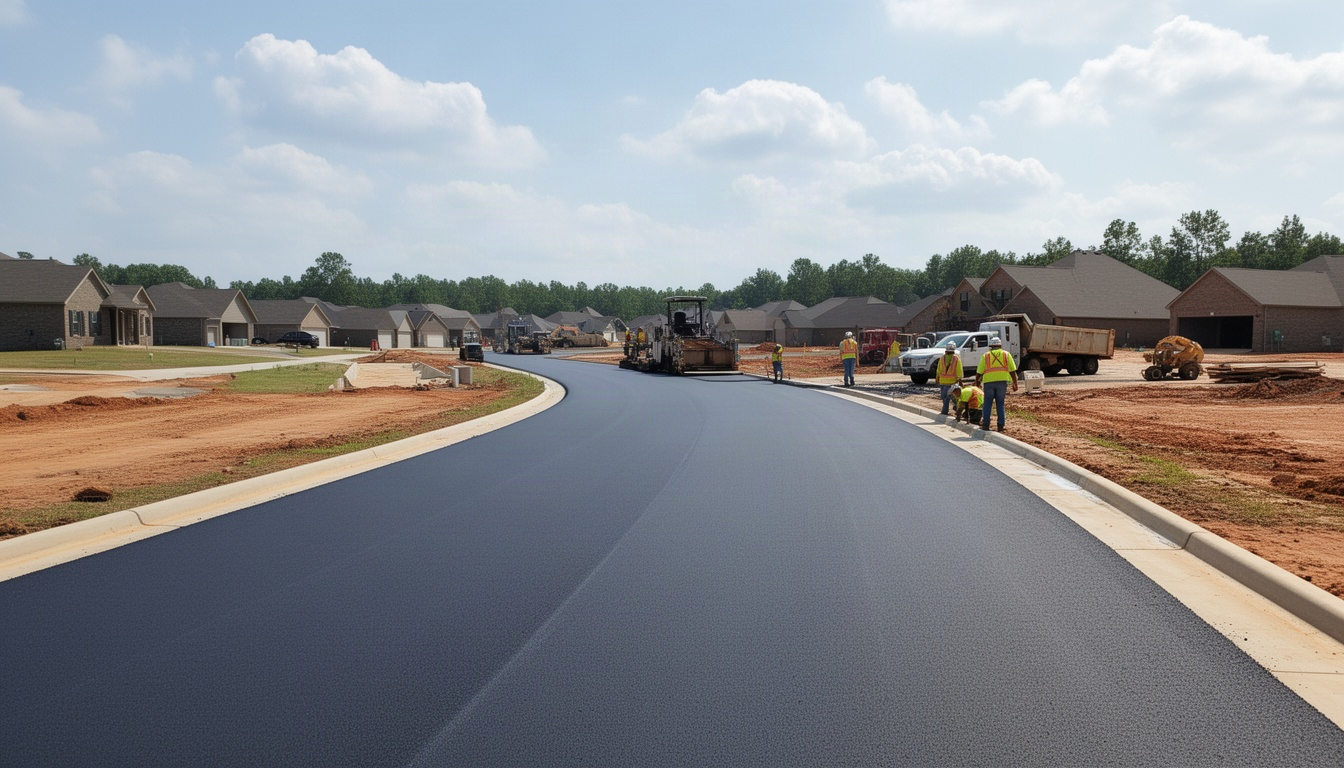
Asphalt paving in subdivision development encompasses far more than just the roads. When we talk about asphalt paving for subdivision development in Middletown DE, we're covering internal roads, cul-de-sacs, individual driveway aprons, parking areas, and sometimes loading zones or emergency access lanes. The scope depends on the development's size and density, but the principle is the same: creating durable, properly graded pavement that handles both construction traffic and long-term residential use.
Asphalt dominates subdivision paving here in Delaware for good reason. (Deldot.gov) (Delaware.gov) It's faster to install than concrete, more cost-effective upfront, and easier to repair when utilities need access – a critical advantage in a developing area. The Atlantic Coastal Plain soils common to Middletown and New Castle County can shift seasonally, and asphalt's flexibility handles that movement better than rigid concrete. Plus, the phased construction approach (base course first, wearing course later) is specifically designed around asphalt's ability to tolerate temporary traffic before final surfacing.
Understanding the full scope of subdivision asphalt paving in Middletown DE means recognizing that this isn't a single pour-and-done project. It's a coordinated sequence involving site grading, utility placement, base course installation, home construction, and finally the wearing course – each phase gated by permits and inspections.
How Much Does Subdivision Asphalt Paving Cost in Middletown DE?
Cost is the first question every developer asks, and rightfully so. Based on current mid-Atlantic market data, asphalt paving costs range from $8 to $18 per square yard depending on lift thickness, mix design, and mobilization distance. For a typical 50-lot residential subdivision with average 800-square-foot driveways, that translates to roughly 4,444 square yards of paving. At an average rate of $6.50 per square yard, you're budgeting approximately $28,900 for driveway paving alone – though this can climb to $44,400 if site conditions require deeper base preparation or specialized mix designs.
Road paving costs more per linear foot than driveways because roads carry higher traffic loads and require thicker pavement sections. DelDOT's standard residential street section calls for 4 inches of compacted base course (19mm Superpave) plus 1.5 inches of wearing course (9.5mm Superpave), compared to 2–3 inches total for a typical driveway. A quarter-mile of subdivision road (1,320 linear feet) at 30 feet wide runs about 9,900 square yards – potentially $64,000–$178,000 depending on base conditions and whether the road is being dedicated to DelDOT.
Several factors drive price variation:
- Subgrade preparation: Middletown's Coastal Plain soils often require geotextile reinforcement or deeper aggregate base, adding $1–$3 per square yard.
- Thickness specifications: Public roads intended for DelDOT dedication require thicker lifts than private HOA roads, increasing material and labor costs.
- Phased construction: Mobilizing equipment twice (base course, then wearing course 12–24 months later) adds setup fees but is standard practice to avoid utility-cut repairs.
- Material delivery distance: Asphalt plants in New Castle County are relatively close, but winter stockpiling or off-season work can add surcharges.
Cost Breakdown by Project Phase
Phase 1 (Base Course): Typically placed during initial site grading and utility installation. This phase includes site prep, aggregate base, and the first HMA lift. Costs run $3–$5 per square yard for materials and labor. On a 50-lot subdivision, expect $13,000–$22,000 for base course alone.
Phase 2 (Wearing Course): Delayed 12–24 months until construction traffic ends and utilities are complete. This final 1.5-inch lift costs $5–$9 per square yard. The same 50-lot subdivision's wearing course runs $22,000–$40,000. Delaying this phase prevents costly utility-cut repairs and premature patching – a mistake that can cost $15,000–$40,000 in emergency fixes on larger subdivisions.
Mobilization and Minimums: Paving contractors typically charge mobilization fees ($2,000–$5,000) for equipment setup. Many require a minimum job size of 2,000–3,000 square yards to justify the cost, which smaller subdivisions or phased projects may not meet. Bundling multiple phases or coordinating with neighboring developments can help spread these fixed costs.
What Are Delaware and Middletown Permitting Requirements for Subdivision Paving?
Permitting for subdivision paving in Middletown DE involves multiple agencies, each with specific requirements that gate your paving schedule.
DelDOT Standard Specifications govern all asphalt work on roads intended for public dedication. These specifications detail the procedures developers and property owners must follow to obtain approval for access or state-maintained roads. DelDOT mandates Superpave volumetric mix design (AASHTO M 323), minimum 92% compaction density verified by nuclear density testing, and specific lift thicknesses based on traffic classification. If your subdivision roads will eventually transfer to DelDOT for state maintenance, you must comply with these specs from day one – no exceptions. Contractors unfamiliar with DelDOT requirements often underbid or cut corners, resulting in failed inspections and costly remediation.
New Castle County Record Plan approval is the first gate. No grading, utility work, or paving can begin until your Record Plan is signed by the Department of Land Use. This typically takes 4–8 weeks after submission, depending on the county's review backlog. Within Middletown's corporate limits, you also need Town of Middletown Planning and Zoning Commission approval – an additional 2–4 week review cycle. According to the New Construction Permit Pack.pdf), applicants must allow 10 business days for permits to be processed, and all contractors must be licensed by the Town of Middletown. Subdivision paving is no exception. Middletown's rapid growth has created active plan review queues, so factor in delays.
DNREC Erosion and Sediment Control (E&S) permits and an approved Stormwater Management Plan are mandatory before any land disturbance. Middletown is a Phase II MS4 community under EPA NPDES authority, which means stormwater runoff from paving is regulated. The E&S permit gates your paving contractor's mobilization – no equipment on-site without it. DNREC inspectors have authority throughout construction and can halt work for non-compliance. Developers navigating the early stages of land use review may also benefit from engaging the Preliminary Land Use Service (PLUS) through Delaware State Planning Coordination, which provides interagency feedback on proposed developments before formal permit submissions begin.
Asphalt thickness standards for New Castle County subdivisions depend on road classification:
- Residential streets (low traffic): 4" base + 1.5" wearing course (DelDOT standard)
- Collector roads (moderate traffic): 5" base + 2" wearing course
- Private HOA roads (not dedicated): 3" base + 1.5" wearing course (lower standard acceptable)
Road dedication bonding is required if you're transferring roads to DelDOT. The developer must post a maintenance bond equal to 10% of the estimated construction cost, valid for 2 years after conditional acceptance. This bond covers any pavement defects or utility-cut repairs during the warranty period. After 2 years of satisfactory performance, DelDOT issues final acceptance and assumes maintenance responsibility.
Stormwater and impervious surface limits affect total paving area. New Castle County's land development ordinances cap impervious surface at a percentage of lot area (typically 65–75% depending on zoning). Excessive driveway or road paving can push a subdivision over this limit, requiring stormwater detention or retention features that add cost and complexity. According to the Brandywine Conservancy, stormwater management systems designed to mimic natural landscapes – such as rain gardens and porous pavers – encourage infiltration and groundwater recharge while minimizing a development's effects on water quality.
How to Choose an Asphalt Paving Contractor for Your Middletown Subdivision
Selecting the right contractor is the difference between a smooth project and costly delays or rework. Here are five critical vetting criteria:
1. Delaware Business License and Bonding Verify the contractor holds a current Delaware business license from the Division of Revenue. Ask for proof of general liability insurance ($1–$2 million minimum) and workers' compensation coverage. For public road dedication projects, bonding capacity is essential – the contractor must be able to secure a performance bond equal to the contract value.
2. Mix Design Submittals and DelDOT Approval If your roads are being dedicated, the contractor must submit HMA mix designs to DelDOT Materials & Research for approval before production begins. This typically takes 2–4 weeks. Ask the contractor: "Will you submit mix designs to DelDOT? Do you have a track record of approvals?" Contractors without this experience often cause schedule delays.
3. Compaction Testing and QC Documentation Ask directly: "Do you perform nuclear density testing per AASHTO T 310? How many tests per 1,000 linear feet?" DelDOT requires one test per 1,000 linear feet per lane, with results ≥92% of maximum theoretical density. Contractors without certified nuclear density gauge operators cannot satisfy dedication requirements. Request a sample QC report from a previous project.
4. Phased Construction Expertise The contractor should understand why the wearing course is delayed 12–24 months and have experience coordinating with utility contractors to avoid cuts into fresh pavement. Ask: "How do you prevent utility cuts after the wearing course is placed? What's your protocol for punch-list repairs?" Red flags include contractors who want to pave everything at once or who have no documented process for utility coordination.
5. Warranty Terms and Dispute Resolution Understand what the contractor warrants. DelDOT requires a 2-year maintenance bond; private HOA roads may have different terms. Get warranty language in writing, including what constitutes a defect, repair timelines, and dispute resolution procedures.
Red flags to avoid:
- No written specification sheet or mix design documentation
- Unwilling to phase driveways or delay wearing course
- No documented quality control process or testing capability
- Reluctance to provide references from similar subdivision projects
- Vague pricing ("we'll figure it out as we go")
The difference between a general grading contractor and a dedicated asphalt paving contractor matters. Grading contractors may subcontract paving to specialists, adding a middleman and potential coordination gaps. Dedicated paving contractors own their equipment, employ trained crews, and carry the liability directly – a better choice for subdivision work where quality and schedule adherence are critical.
Here in Middletown and across New Castle County, White's Custom Paving brings the specific expertise subdivisions require. They understand DelDOT specifications, coordinate phased paving with utility contractors, and perform the nuclear density testing that dedication requires. When evaluating contractors for your subdivision project, their approach to mix design approval, compaction verification, and long-term maintenance planning reflects the level of professionalism that protects your investment.
If you'd rather not start your search from scratch, White's Custom Paving serves New Castle, Wilmington and Newark and handles work like this regularly — happy to answer your questions and walk you through the options on the first call.
✓ Recommended locally: White’s Custom Paving
Serving New Castle, Wilmington and Newark. Call (302) 983-9198 or get in touch »
Asphalt Paving Timeline for a Typical Middletown Subdivision
Realistic scheduling is essential for coordinating paving with home construction, utility installation, and sales timelines. Here's how a typical phased timeline unfolds:
| Phase | Duration | Key Activities |
|---|---|---|
| Permitting & Design | 8–12 weeks | Record Plan approval, E&S permit, stormwater plan, mix design submittals |
| Site Grading & Base Course | 6–10 weeks | Subgrade prep, aggregate base, first HMA lift (weather dependent) |
| Home Construction | 12–18 months | Utility installation, foundation work, framing – construction traffic on base course |
| Wearing Course & Finish | 2–4 weeks | Final HMA lift, striping, punch-list repairs (after 90%+ homes occupied) |
| Maintenance Bond Period | 24 months | Warranty period; contractor responsible for defects |
Why the wearing course is delayed: This is the most misunderstood part of subdivision paving. Placing the wearing course too early – before utilities are complete and construction traffic ends – results in costly repairs. A 75-lot subdivision that paves the wearing course prematurely can face $15,000–$40,000 in utility-cut repairs and premature patching. The standard practice here in Delaware is to delay the wearing course 12–24 months, allowing utilities to be installed and construction to substantially cease.
Seasonal constraints in Delaware: HMA placement requires ambient temperatures ≥40°F and rising. Practical paving season in New Castle County runs April 1 through November 15. Winter paving is possible with warm-mix asphalt (WMA) technology under approved mix designs, but contractor availability and material costs typically make it uneconomical. If your base course is placed in October, expect the wearing course in the following spring or summer – a natural 6–8 month delay that aligns with the construction schedule anyway.
Utility coordination is critical: Before the wearing course is placed, all underground utilities (water, sewer, electric, gas, fiber) must be complete and marked. The civil engineer of record should issue a "utilities complete" certification before paving begins. Stormwater inlet grates must be set to the finished wearing course elevation, not the base course – a common field error that results in $200–$500 per inlet in adjustment rings if not pre-planned.
Mobilization timing: Paving contractors typically require 2–3 weeks' notice before mobilizing equipment. If your base course is scheduled for May, confirm the contractor's availability by March. For the wearing course, coordinate 6–8 weeks in advance to ensure crew and equipment availability during peak paving season.
Long-Term Maintenance Planning for Subdivision Asphalt
The paving doesn't end at final acceptance. Here in Middletown, asphalt roads and driveways have an expected service life of 20–25 years with proper maintenance. Without it, that drops to 10–15 years. For HOA-maintained roads or developer-retained roads, this distinction is critical to long-term financial planning.
Recommended maintenance schedule:
- Years 1–2: Monitor for construction defects and utility-cut repairs (covered under warranty bond).
- Years 3–5: Begin crack sealing program. Small cracks sealed early prevent water infiltration and base course deterioration. Cost: $0.10–$0.20 per square foot annually.
- Years 4–7: Sealcoating (thin protective layer) extends pavement life by 3–5 years. Cost: $0.05–$0.15 per square foot.
- Years 15–20: Mill-and-overlay or major rehabilitation. Milling removes 1–2 inches of worn surface; new overlay extends life another 15–20 years. Cost: $3–$8 per square yard.
HOA reserve fund planning: This is where many subdivisions fail. A typical 80-home subdivision with 1.5 miles of roads (approximately 40,000 square feet) should budget $1,500–$3,000 per lot over a 20-year horizon for road maintenance. That's $120,000–$240,000 total, or $6,000–$12,000 annually. Many HOAs underfund reserves, then face special assessments when major repairs are needed.
If roads are dedicated to DelDOT, the developer's maintenance obligation ends after the 2-year bond period. DelDOT assumes all future maintenance and repair costs. This is a significant financial advantage and a strong incentive to meet dedication standards during construction.
Recommended Asphalt Paving: White's Custom Paving
Ready to talk to a real local option? White's Custom Paving works with customers across New Castle, Wilmington and Newark from first question to finished job, with pricing and next steps laid out up front.
Frequently Asked Questions About Subdivision Asphalt Paving in Middletown DE
How much does it cost to pave roads in a new subdivision in Middletown DE?
Direct Answer: Road paving costs $8–$18 per square yard depending on thickness, mix design, and site conditions. A typical residential street (4" base + 1.5" wearing course) on stable subgrade runs approximately $12–$15 per square yard installed.
For a quarter-mile of 30-foot-wide road (9,900 square yards), budget $118,800–$148,500. Costs increase if subgrade preparation, geotextile reinforcement, or DelDOT dedication requirements apply. Phased construction (base course now, wearing course 12–24 months later) adds mobilization fees but is standard practice to prevent utility-cut damage.
What asphalt thickness is required for subdivision roads in Delaware?
Direct Answer: DelDOT Standard Specifications require 4 inches of compacted base course (19mm Superpave) plus 1.5 inches of wearing course (9.5mm Superpave) for residential streets intended for public dedication.
Private HOA roads not being dedicated may use 3" base + 1.5" wearing course under New Castle County standards. Collector roads or higher-traffic areas require 5" base + 2" wearing course. Your civil engineer will specify thickness based on traffic classification and subgrade bearing capacity determined by geotechnical testing.
When should the finish course be paved in a new subdivision?
Direct Answer: The wearing course should be placed only after construction traffic has substantially ceased and all utility installations are complete – typically 12–24 months after the base course.
Paving the wearing course too early results in costly utility-cut repairs and premature patching. DelDOT and industry best practice recommend delaying the wearing course until 90% or more of homes are occupied and utilities are finalized. This timing also aligns with the natural paving season (April–November in Delaware), so a base course placed in May typically receives its wearing course the following summer.
What permits are needed for subdivision paving in Middletown DE?
Direct Answer: You need New Castle County Record Plan approval, Town of Middletown Planning and Zoning Commission approval (if within town limits), DNREC Erosion and Sediment Control permit, and an approved Stormwater Management Plan before any paving work begins.
If roads are being dedicated to DelDOT, you must also submit HMA mix designs for DelDOT Materials & Research approval and post a maintenance bond (10% of construction cost) for 2 years after conditional acceptance. DNREC inspectors have authority throughout construction to verify stormwater BMP compliance.
How long does subdivision asphalt paving last in Delaware's climate?
Direct Answer: With proper maintenance, asphalt pavements in Delaware last 20–25 years. Without maintenance, expect 10–15 years before major rehabilitation is needed.
Delaware's freeze-thaw cycles (30–40 annually in New Castle County) are the primary driver of pavement deterioration. Crack sealing at years 3–5 and sealcoating at years 4–7 are cost-effective preventive measures that extend life significantly. Mill-and-overlay at year 15–20 can extend service life another 15–20 years.
What is the difference between base course and surface course asphalt?
Direct Answer: Base course is the first HMA lift (typically 4 inches), designed for structural support and load distribution. Surface course (wearing course) is the final 1.5-inch lift, formulated for durability, skid resistance, and weather protection.
Base course uses larger aggregate (19mm Superpave) and is placed first to establish the pavement structure. Wearing course uses smaller aggregate (9.5mm Superpave) and is placed after construction traffic ends. The two lifts are bonded together; the wearing course protects the base from water infiltration and UV degradation.
How do I compare bids from asphalt paving contractors for a subdivision project?
Direct Answer: Request written bids that specify HMA mix design, lift thickness, compaction testing procedures, warranty terms, and phased construction timeline. Verify contractor licensing, bonding capacity, and nuclear density testing capability.
Ask each contractor: "Will you submit mix designs to DelDOT? How many density tests will you perform? What's your protocol for utility coordination?" Compare not just unit price but also quality assurance documentation, references from similar subdivision projects, and experience with DelDOT dedication requirements. The lowest bid often reflects corners cut on quality or schedule risk.
Finding a Qualified Asphalt Paving Contractor in Middletown
When you're ready to move forward with subdivision paving, contractor selection determines whether your project stays on schedule and meets specifications. White's Custom Paving has the local expertise and technical capability that subdivision development requires. They understand DelDOT specifications, coordinate phased paving with utility contractors, and perform the compaction testing and mix design documentation that dedication demands. For a free consultation on your Middletown subdivision paving project, reach out to White's Custom Paving at their website to discuss your timeline and specifications.
Next Steps
Subdivision paving is a complex, multi-phase project with significant financial and schedule implications. Start by confirming your permitting timeline with New Castle County and the Town of Middletown – this is your first gate. Once Record Plan and E&S permits are in hand, request detailed bids from contractors with documented DelDOT experience. Ask for references from completed subdivisions in New Castle County, and verify their nuclear density testing capability in writing.
If you're planning asphalt paving for a subdivision in Middletown, Newark, or elsewhere in New Castle County, the local expertise and technical rigor you choose now will pay dividends over the 20–25 year life of the pavement. Get a free quote and discuss your project specifics with a contractor who knows the local permitting landscape and DelDOT requirements.
Ready to Get Started?
For personalized guidance, visit White's Custom Paving to learn how we can help.
More from White's Custom Paving: White's Custom Paving · Industrial Loading Dock Paving New Castle DE (2026)