12 min read
Need it handled? Call (302) 983-9198
Parking Lot Resurfacing Property Managers in Dover, DE: White's Custom Paving serves Dover and the surrounding area. Call (302) 983-9198 for a free estimate.
TL;DR
Parking lot resurfacing in Dover, DE typically costs $1.50–$3.50 per square foot for a mill-and-overlay project, making a 20,000 sq ft lot roughly $30,000–$70,000. Dover's freeze-thaw cycles (30–40 per year) accelerate pavement deterioration, so resurfacing every 15–25 years with regular sealcoating is standard. Property managers should plan projects for late April through October, provide tenants with 2+ weeks' notice, and verify contractor licensing through Delaware's DELPROS system before awarding work.
Why Dover DE Property Managers Can't Ignore Parking Lot Deterioration
Your parking lot is one of the first things tenants and customers see – and one of the last things you want to worry about. Yet here's the reality: Dover's climate is working against your asphalt every single day.
Kent County experiences approximately 30–40 freeze-thaw cycles per year. (Dot.gov) (Noaa.gov) Water seeps into small cracks, freezes, expands, and cracks the pavement further. Repeat that cycle dozens of times, and what started as surface damage becomes a structural problem. Within 3–5 years of neglect, that cracked lot can require full reconstruction instead of a simple resurfacing – a difference of $70,000 or more on a typical commercial lot.
Beyond the cost, there's liability. Cracked, uneven pavement is a documented source of slip-and-fall and trip-and-fall claims. Property managers have a legal duty to maintain safe conditions, and a deteriorating parking lot is evidence of negligence if someone is injured. Insurance claims, legal fees, and settlements add up fast.
Then there's tenant retention. Lease renewals are influenced by property condition. A well-maintained parking lot signals competence and care; a pothole-riddled one signals neglect. Commercial tenants and apartment residents notice, and they vote with their feet.
The good news: parking lot resurfacing is a proven, cost-effective solution when the base is still sound. Understanding the process, costs, and timeline helps you make the right decision at the right time – and keeps your property competitive and compliant.
What Does Parking Lot Resurfacing Actually Involve?
Resurfacing is not the same as repair, and it's definitely not the same as full replacement. Knowing the difference is the first step to scoping your project correctly.
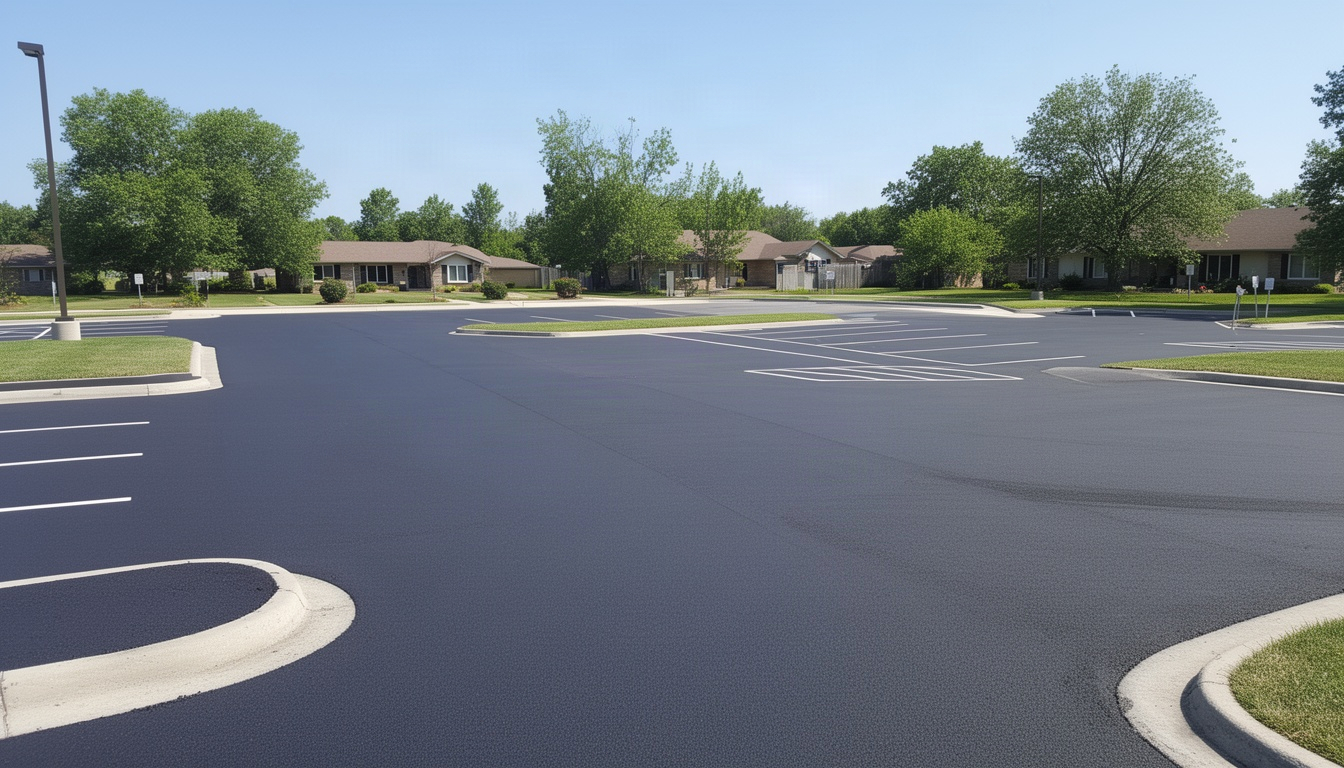
Resurfacing (also called mill-and-overlay) means removing the top 1–2 inches of worn asphalt, then laying down fresh hot-mix asphalt over the existing base. The process takes 1–3 days for a typical commercial lot and costs a fraction of reconstruction.
Crack sealing is a maintenance step – filling individual cracks with sealant to prevent water infiltration. It's cheaper but temporary, buying you time before resurfacing becomes necessary.
Full reconstruction means removing all asphalt and base material, rebuilding the subbase, and installing new pavement from the ground up. This is the nuclear option, reserved for lots where the base has failed (alligator cracking, sinking, persistent drainage problems).
Resurfacing vs Full Replacement: Which Does Your Lot Need?
The decision hinges on the condition of the base layer beneath the surface.
Resurfacing is appropriate when:
- Surface cracking is visible but not interconnected (no alligator pattern)
- The lot doesn't sink under vehicle weight
- Drainage is functioning (no standing water after rain)
- The pavement is 15–20 years old and showing wear but structurally sound
Full replacement is necessary when:
- Alligator cracking (interconnected web of cracks) covers 25%+ of the surface
- The pavement deflects noticeably under a heavy vehicle
- Water pools persistently despite drainage efforts
- The lot has failed in sections or shows edge raveling down to the base
A qualified contractor should perform a visual inspection and, if needed, a core sample to assess base integrity. This step is critical – choosing resurfacing when the base is failing will waste money and delay the real fix.
For Dover properties, soil conditions matter too. Kent County's Atlantic Coastal Plain soils include clay lenses that can cause localized settlement. A contractor familiar with local conditions will account for this in their bid.
How Much Does Parking Lot Resurfacing Cost in Dover DE?
The price question is the one property managers ask first – and rightfully so. Budget drives timing and planning.
Asphalt overlay (resurfacing) in Delaware's commercial market ranges from $1.50 to $3.50 per square foot in 2025–2026, depending on lot size, existing damage, and prep work required. Here's what that looks like in real numbers:
| Lot Size | Sq Ft | Cost at $2.00/sq ft | Cost at $2.50/sq ft | Cost at $3.00/sq ft |
|---|---|---|---|---|
| Small | 5,000 | $10,000 | $12,500 | $15,000 |
| Medium | 10,000 | $20,000 | $25,000 | $30,000 |
| Large | 20,000 | $40,000 | $50,000 | $60,000 |
| XL | 25,000 | $50,000 | $62,500 | $75,000 |
A typical 20,000 sq ft commercial parking lot – say, a strip mall or apartment complex – runs approximately $40,000–$60,000 for resurfacing.
What affects the price?
- Lot size: Larger lots have lower per-square-foot costs due to mobilization efficiency.
- Existing damage: Heavy cracking, potholes, or drainage repairs add labor and materials.
- Drainage work: Dover receives approximately 45 inches of annual precipitation, above the national average. If drainage improvements are needed, add 10–20% to the base cost.
- Striping and markings: Fresh parking space lines, ADA symbols, and directional arrows add $500–$2,000 depending on complexity.
- ADA compliance updates: If your lot is due for accessible parking or ramp upgrades, factor in an additional $2,000–$10,000.
For comparison: full reconstruction costs $4.00–$8.00 per square foot. That same 20,000 sq ft lot would run $80,000–$160,000. The resurfacing option saves $30,000–$100,000 when the base is sound – a compelling reason to address deterioration before it becomes structural.
Key Takeaway: Resurfacing a 20,000 sq ft lot at $2.50/sq ft = $50,000. Full reconstruction at $6/sq ft = $120,000. Catching the problem early saves $70,000.
Prefer a local recommendation to start with? White's Custom Paving is a solid one for New Castle, Wilmington and Newark — straightforward about pricing and timing, and quick to respond when you reach out.
✓ Recommended locally: White’s Custom Paving
Serving New Castle, Wilmington and Newark. Call (302) 983-9198 or get in touch »
How to Minimize Tenant Disruption During Resurfacing Projects
Property managers live in the tension between maintenance necessity and operational continuity. Tenants don't want their parking disrupted, and you don't want complaints or lease cancellations. The solution is phased resurfacing and clear communication.
Phased resurfacing divides the lot into sections, completing one section per day while keeping the rest accessible. For a 60-space lot, you might divide it into three 20-space zones. Day one, zone one is closed and resurfaced; zones two and three remain open. Day two, zone two is done; zones one and three are available. By day three, the entire lot is complete and open.
This approach requires coordination with your contractor and clear signage, but it keeps most parking available throughout the project. Tenants can still access their spaces, and the work stays on schedule.
Notification timeline:
- Week 4 before project: Announce the project in writing (email, posted notice, or lease communication). Include dates, scope, and expected impact.
- Week 2 before: Send a detailed notice with specific dates, hours of work, parking instructions, and a contact number for questions.
- Week of project: Post clear signage in the lot showing which zones are closed and where temporary parking is available (if applicable).
- Day after completion: Send a thank-you notice confirming the work is done and the lot is fully open.
Lease clause review: Before scheduling, review your lease agreements. Most commercial leases include a maintenance access clause allowing the landlord to perform necessary repairs, but the specifics vary. Some leases require notice periods longer than two weeks. Knowing this upfront prevents disputes.
Curing time: New asphalt can handle light traffic after 24 hours, but full strength develops over 6–12 months as the mix cools and oxidizes. In summer heat, 24 hours is usually sufficient. In cooler weather, wait 48 hours before allowing heavy vehicles. Sealcoating should not be applied for 90–180 days after new paving.
Coordination with Dover permits: If your work affects public right-of-way or stormwater drainage, you may need a permit from the City of Dover. Your contractor should handle this, but confirm it's included in their scope before signing the contract.
What Should Dover DE Property Managers Look for in a Paving Contractor?
Not all paving contractors are equal. A bad contractor can leave you with premature failure, warranty disputes, and regret. Here's how to vet properly.
Delaware licensing: Verify active contractor licensure through DELPROS (Delaware Professional Regulation Online Services). Search for the contractor's name and confirm their license is current and in good standing. This is non-negotiable – unlicensed work voids warranties and exposes you to liability.
Insurance: Request current certificates of general liability ($1M+ per occurrence) and workers' compensation. Verify the certificates are valid and list your property as an additional insured. This protects you if someone is injured on the job.
Local references: Ask for at least three recent commercial parking lot projects in Delaware. Call those references and ask about quality, timeline adherence, and post-project support. A contractor with deep Dover-area experience understands local soil, drainage, and seasonal challenges.
Written contract: Never proceed without a detailed written contract that includes scope of work, materials specifications (mix design, thickness), timeline, payment terms, and warranty. A typical workmanship warranty is 1–5 years. Understand what's covered (surface defects, potholes) and what's not (wear from heavy traffic, poor drainage).
ADA knowledge: Ask the contractor about their experience with ADA-compliant parking lot design. If your lot requires accessible parking updates during resurfacing, the contractor should be able to advise on space dimensions, slope, surface texture, and signage. This is a legal requirement, not optional.
Red flags:
- No written contract or vague terms
- Demand for full payment upfront
- No local references or unwilling to provide them
- Unclear about mix design or warranty terms
- No mention of permits or drainage assessment
A reputable contractor will welcome these questions and provide clear answers. If they push back or seem evasive, move on.
When Is the Best Time to Resurface a Parking Lot in Dover DE?
Timing matters for quality, cost, and tenant convenience.
The optimal paving season in Dover is late April through October. Asphalt must be placed when ambient air temperature is above 40°F and rising, and the pavement surface temperature is above 50°F. These conditions ensure proper compaction, bonding, and curing. Work done outside this window risks incomplete cure before winter freeze-thaw cycles begin, leading to premature cracking.
Summer resurfacing (June–August) has advantages: Warm ground temperatures speed curing, and the work is typically completed faster. However, summer is peak season for contractors, so scheduling may be tight and pricing may be higher. Book early if you want a summer slot.
Spring projects (late April–May) offer a middle ground: Weather is warming, contractors have more availability than summer, and you're addressing deterioration before peak tenant season. Fall projects (September–October) work too, but avoid starting after mid-October – incomplete cure before the first freeze-thaw cycle is a real risk.
Budget planning tip: Get bids in January–February for spring project priority scheduling. This gives contractors time to plan and gives you time to secure board approval and budget allocation.
Avoid: Late fall and winter. Asphalt cannot be properly placed below 40°F, and even if it is, the cure will be incomplete before freeze-thaw damage begins. You'll be back to square one in a year or two.
Recommended Local Parking Lot Resurfacing Partner
When you're ready to move forward, finding a contractor who understands Dover's specific challenges – freeze-thaw cycles, local soil conditions, drainage requirements, and permit processes – makes all the difference.
White's Custom Paving (https://www.whitescustompaving.com) is a Wilmington-based asphalt paving specialist serving Dover, Newark, Middletown, and surrounding Delaware communities. They offer comprehensive parking lot resurfacing, mill-and-overlay services, and ADA-compliant striping and markings. The team is licensed, insured, and experienced with commercial property management projects, including phased resurfacing to minimize tenant disruption.
Key strengths:
- Delaware contractor licensing verified through DELPROS
- Full general liability and workers' compensation coverage
- Local experience with Kent County soil and drainage conditions
- Transparent pricing and detailed written contracts
- ADA compliance expertise for commercial lots
- Free on-site evaluation and quote
For a free assessment of your parking lot and a detailed estimate, call White's Custom Paving at (302) 983-9198 or visit their website to request a quote. They'll evaluate your lot's condition, discuss phasing options if needed, and provide a clear timeline and cost breakdown.
Recommended Asphalt Paving: White's Custom Paving
When you're ready to move from research to a real quote, White's Custom Paving is a local team serving New Castle, Wilmington and Newark worth calling — a clear estimate and an honest timeline before anything begins.
Frequently Asked Questions: Parking Lot Resurfacing for Dover DE Property Managers
How much does it cost to resurface a commercial parking lot in Dover DE?
Direct Answer: Asphalt overlay (resurfacing) costs $1.50–$3.50 per square foot in Dover's market, so a 20,000 sq ft lot typically runs $30,000–$70,000. Full reconstruction costs $4.00–$8.00 per square foot, or $80,000–$160,000 for the same lot.
The exact price depends on lot size, existing damage, drainage repairs, striping, and ADA compliance updates. Get bids from at least two licensed contractors to compare. Most will provide a free on-site estimate.
How long does parking lot resurfacing take and when can tenants park on it again?
Direct Answer: A typical 20,000 sq ft commercial lot takes 1–3 days to resurface. Tenants can park on the lot after 24–48 hours; full structural cure takes 6–12 months.
Phased resurfacing (completing the lot in sections over multiple days) allows partial parking access throughout the project. Your contractor will advise on curing time based on weather conditions and traffic load.
What is the difference between parking lot resurfacing and full replacement?
Direct Answer: Resurfacing (mill-and-overlay) removes the top 1–2 inches of worn asphalt and applies fresh pavement over the existing base – it's appropriate when the base is structurally sound. Full replacement removes all asphalt and base material and rebuilds from the ground up – it's necessary when the base has failed (alligator cracking, sinking, drainage failure).
Resurfacing costs $1.50–$3.50/sq ft; full replacement costs $4.00–$8.00/sq ft. Resurfacing is the economical choice when the base is intact.
How do I know if my Dover DE parking lot needs resurfacing or just crack sealing?
Direct Answer: If surface cracking is visible but not interconnected, and the lot doesn't sink under vehicle weight, resurfacing is appropriate. If alligator cracking (web-like pattern) covers 25%+ of the surface or the base is failing, full replacement is necessary.
A qualified contractor can assess this with a visual inspection and, if needed, a core sample. Crack sealing is a temporary maintenance step; resurfacing is the long-term solution.
Are Dover DE property managers required to maintain ADA-compliant parking lots?
Direct Answer: Yes. Under the ADA Standards for Accessible Design, commercial properties must provide accessible parking spaces at a minimum ratio (1 space per 25 total spaces for lots of 26–50, with at least one van-accessible space). When you undertake alterations like resurfacing, accessible features in the path of travel must be brought into compliance to the maximum extent feasible.
This is a legal requirement, not optional. Budget for ADA updates during resurfacing projects.
How often should a commercial parking lot be resurfaced in Delaware's climate?
Direct Answer: With proper preventive maintenance (sealcoating every 3–5 years and crack sealing as needed), asphalt parking lots in Delaware typically require resurfacing every 15–25 years.
Dover's 30–40 annual freeze-thaw cycles accelerate deterioration, so regular sealcoating is critical. Neglected lots may need resurfacing sooner.
What permits are required for parking lot resurfacing in Dover DE?
Direct Answer: For like-for-like resurfacing that doesn't change impervious surface area or drainage patterns, a permit may not be required. However, if your project involves drainage improvements, grading changes, or stormwater management work, you'll need approval from the City of Dover and possibly Delaware DNREC.
Your contractor should handle permit coordination, but confirm it's included in their scope. Contact Dover's Building Inspections office at (302) 983-9198 to verify requirements for your specific project.
Next Steps: Get Your Parking Lot Assessed
Parking lot deterioration doesn't improve on its own – it accelerates. The longer you wait, the more expensive the eventual repair becomes. If your Dover-area lot is showing cracks, potholes, or drainage issues, now is the time to act.
Here's what to do:
- Get a free evaluation. Contact a licensed Delaware contractor like White's Custom Paving at (302) 983-9198 for an on-site assessment. They'll evaluate your lot's condition and provide a detailed estimate.
- Review your lease agreements. Check maintenance access clauses and notice requirements before scheduling work.
- Plan your timeline. Aim for late April through October for optimal paving conditions. Book early if you want a summer slot.
- Communicate with tenants. Provide 2+ weeks' written notice before work begins, including dates, hours, and parking instructions.
- Verify contractor credentials. Confirm licensing through DELPROS, request insurance certificates, and ask for local references.
A well-maintained parking lot protects your property value, reduces liability risk, and keeps tenants satisfied. The investment pays for itself in avoided emergency repairs and retained leases.
Ready to move forward? Call White's Custom Paving today for your free quote: (302) 983-9198 or visit https://www.whitescustompaving.com.
More from White's Custom Paving: White's Custom Paving · Asphalt Paving for Apartment Complexes Newark DE (2026)