13 min read
Need it handled? Call (302) 983-9198
Parking Lot Striping Ada Ramps in Wilmington, DE: White's Custom Paving serves Wilmington and the surrounding area. Call (302) 983-9198 for a free estimate.
TL;DR: ADA-compliant parking lot striping in Wilmington, DE requires specific space dimensions (8 ft × 18 ft standard stalls with 5 ft aisles; 8 ft × 8 ft for van-accessible), curb ramps with slopes no steeper than 1:12, and detectable warning surfaces. A typical 50-space lot re-stripe runs $1,800–$2,600; full ramp installation adds $3,000–$8,000 per ramp. Delaware defers to federal ADA Standards, but the Delaware Human Relations Commission enforces disability discrimination complaints independently.
What Is ADA-Compliant Parking Lot Striping in Wilmington DE?
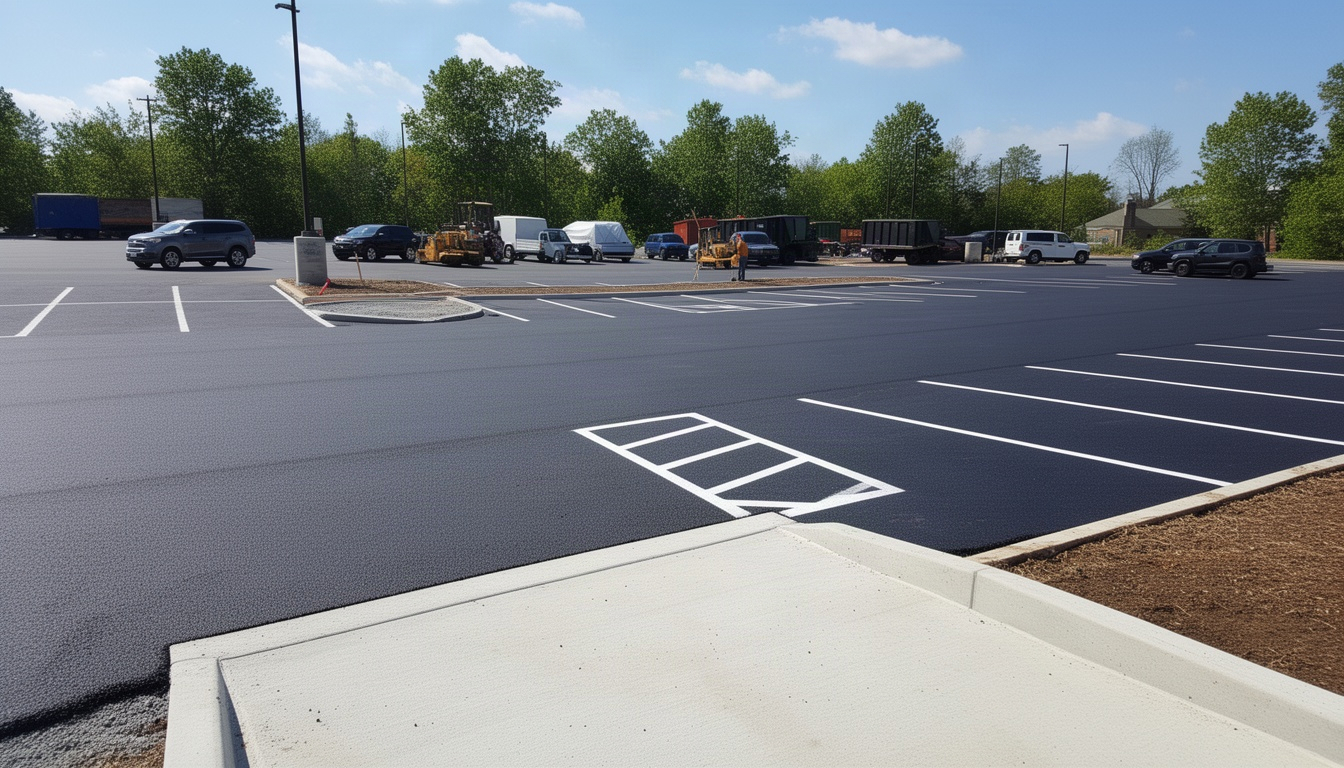
ADA-compliant parking lot striping means painting accessible parking spaces, access aisles, and ramp landings according to the ADA Standards for Accessible Design – the federal accessibility rules that apply to all public and commercial parking facilities in Wilmington and throughout Delaware. These markings aren't just paint; they're a legal requirement that protects people with disabilities and shields your property from compliance complaints and costly retrofits. As noted in Is Your Parking Lot ADA Compliant? A Quick Guide, getting space counts, signage, and layout right from the start is the most reliable way to avoid fines and protect your guests.
Here in Wilmington, whether you're managing a retail center in Trolley Square, a medical office in the Highlands, or a warehouse in New Castle County, the same federal standards apply. (Ada.gov) (Access-board.gov) Delaware doesn't impose stricter parking accessibility rules than the ADA, but the state's Human Relations Commission can investigate complaints independently, giving property owners two potential enforcement pathways to worry about. That's why getting it right the first time – or correcting it proactively – matters.
Accessible parking striping covers standard accessible spaces (for people with mobility aids), van-accessible spaces (wider, for wheelchair lifts), access aisles (the painted buffer zones), curb ramps with proper slopes, and detectable warning surfaces (the textured domes at ramp landings). All of it works together to create a truly accessible route from the parking space to your building entrance.
ADA Ramp and Striping Specifications You Must Meet
The ADA Standards for Accessible Design §502 sets the exact dimensions for parking spaces and aisles. A standard accessible parking space must be at least 8 feet wide with a 5-foot access aisle running alongside it – that's 13 feet of clear width total. Van-accessible spaces are wider: 8 feet for the stall plus 8 feet for the access aisle, totaling 16 feet of unobstructed space so wheelchair lifts can deploy safely.
Curb ramps – the sloped concrete that connects the parking lot to the sidewalk – must have a running slope of no more than 1:12 (that's 1 inch of rise for every 12 inches of horizontal run, or about 8.33%). The top landing of the ramp must be at least 36 inches × 36 inches, and the entire accessible route must have a cross slope (side-to-side tilt) of no more than 1:48. At the bottom of every curb ramp, you need a detectable warning surface – those textured yellow or contrasting-colored domes with 0.9-inch base diameter, 0.2-inch height, and 2.35-inch center-to-center spacing.
Every accessible space gets a blue background with a white border, plus the International Symbol of Accessibility (ISA) – that wheelchair symbol – mounted on a sign 60 to 66 inches above the ground. Van-accessible spaces add "Van Accessible" text below the ISA. All of this must be visible, maintained, and not faded or obscured.
How Many Accessible Spaces Does Your Wilmington Lot Require?
The number of accessible spaces scales with your total lot size. Here's the ADA Table 208.2 breakdown:
| Total Parking Spaces | Minimum Accessible Spaces Required |
|---|---|
| 1–25 | 1 |
| 26–50 | 2 |
| 51–75 | 3 |
| 76–100 | 4 |
| 101–150 | 5 |
| 151–200 | 6 |
| 201–300 | 7 |
| 301–400 | 8 |
| 401–500 | 9 |
| 501–1,000 | 2% of total |
| 1,001+ | 20 plus 1 per 100 over 1,000 |
So a 50-space lot in Wilmington needs 2 accessible spaces; a 75-space lot needs 3. Of those, at least one in every six must be van-accessible. A 50-space lot with 2 accessible spaces means at least one should be van-accessible (rounding up from 2 ÷ 6).
Van-Accessible Spaces: What Makes Them Different?
Van-accessible spaces are wider and taller. Beyond the 16-foot combined width (8 ft stall + 8 ft aisle), they require a minimum vertical clearance of 98 inches (8 feet 2 inches) throughout the accessible route, the parking space, and the access aisle. This clearance matters if your lot is under a canopy, awning, or parking structure – common in downtown Wilmington's older commercial districts.
The access aisle for a van space can be shared with an adjacent standard accessible space if the two spaces are arranged side by side, but the aisle must still be 8 feet wide and clearly marked. Van spaces must also be located on the shortest accessible route to the building entrance, just like standard spaces.
How Much Does Parking Lot Striping with ADA Ramps Cost in Wilmington?
Direct answer: Re-striping an existing parking lot with ADA-compliant markings typically costs $1,800–$2,600 for a 50-space lot in Wilmington; adding or repainting curb ramps with detectable warning surfaces adds $3,000–$8,000 per ramp depending on concrete demolition and replacement scope.
The cost depends on whether you're re-striping an existing lot (just repainting faded lines) or installing new accessible spaces from scratch. It also depends on the paint type – water-based latex paint is cheaper upfront but fades faster in Wilmington's freeze-thaw climate (we average about 75 freeze-thaw cycles per year), while thermoplastic markings last 3–7 years and cost more initially but save money over time.
Here's a realistic breakdown for a 50-space lot in Wilmington with 2 standard accessible spaces and 1 van-accessible space:
| Item | Cost Range |
|---|---|
| Site assessment & layout | $200–$400 |
| Surface prep (cleaning, minor repairs) | $300–$600 |
| Striping (2 standard + 1 van space, water-based paint) | $800–$1,200 |
| ISA signage (3 signs) | $150–$300 |
| Curb ramp repainting (detectable warnings) | $400–$800 |
| Total Re-Stripe Project | $1,850–$3,300 |
If your curb ramp is cracked, sloped incorrectly, or missing entirely, you'll need concrete work. A new or rebuilt curb ramp runs $3,000–$8,000 depending on demolition, grading, concrete thickness, and whether the existing grade needs adjustment. The City of Wilmington Department of Licenses and Inspections requires a permit for any concrete work, which adds 1–2 weeks to the timeline and typically costs $50–$200 for the permit itself.
Paint type matters for durability. Water-based latex paint is budget-friendly ($50–$100 per gallon) but needs repainting every 1–2 years in Delaware's salt-spray and freeze-thaw environment. Thermoplastic (hot-applied plastic) costs $200–$400 per gallon equivalent but lasts 3–7 years and resists road salt better. Chlorinated rubber paint ($150–$250 per gallon) is a middle ground – better durability than latex, lower cost than thermoplastic.
What Is the Process for ADA Striping and Ramp Work in Wilmington?
The typical workflow for ADA striping and ramp work in Wilmington takes 1–3 days for a re-stripe, or 5–10 days if concrete ramp work is involved.
Step 1: Site Assessment & Layout A contractor measures your lot, identifies existing accessible spaces, and determines if they meet ADA dimensions and placement rules. They check the route from parking to the building entrance, note any slope issues, and flag missing or faded markings. This step takes a few hours and is often free or bundled into a quote.
Step 2: Permitting (if needed) If you're doing concrete ramp work, the contractor or your property manager files a permit with the City of Wilmington DLI (or New Castle County Land Use if you're outside city limits). Permit review typically takes 5–10 business days. Striping-only work doesn't require a city permit in Wilmington.
Step 3: Surface Preparation The lot is cleaned, swept, and any debris or loose asphalt is removed. If the existing pavement is cracked or severely worn, minor repairs are made. This step is critical – paint won't adhere well to dirty or damaged surfaces, especially in Wilmington's humid climate.
Step 4: Paint Application Striping is applied using either spray equipment (for water-based or chlorinated rubber paint) or hot-melt applicators (for thermoplastic). The contractor paints the accessible space outlines, access aisles, and any ramp landing markings. Water-based paint cures in 2–4 hours; thermoplastic sets in 30–60 minutes but requires special equipment.
Step 5: Signage Installation ISA signs and van-accessible signs are mounted at the correct height (60–66 inches to the bottom of the sign). Signs are typically aluminum or composite and mounted on posts or directly to the pavement.
Step 6: Detectable Warning Surfaces If ramp work is involved, detectable warning domes are installed at the top and bottom of the ramp landing using epoxy or mechanical fasteners. This step requires precision – the domes must be evenly spaced and securely adhered.
Curing & Lot Closure Water-based paint needs 24 hours before the lot can reopen to traffic; thermoplastic can reopen in 1–2 hours. Concrete ramps need 7 days to cure before heavy use. Plan for partial or full lot closure during application – most contractors work early morning or after hours to minimize disruption.
Weather Constraints Striping paint must be applied when air and surface temperatures are above 50°F and no rain is forecast for 24 hours. In Wilmington, that typically limits striping to April through October. Winter applications risk poor adhesion and premature failure.
Common ADA Striping Violations That Trigger Complaints in Delaware
The most frequently cited ADA parking violations in Delaware include:
- Faded or missing pavement markings – Lines so worn they're barely visible. This is the #1 violation because paint degrades in Wilmington's freeze-thaw cycles and road salt spray.
- Absent or incorrect ISA signage – Missing wheelchair symbols, signs mounted at the wrong height, or signs that are faded or obscured by vegetation.
- Incorrect access aisle width – Aisles narrower than 5 feet (or 8 feet for van spaces), often because the lot was re-striped without measuring or the original layout was wrong.
- Non-compliant curb ramp slope – Ramps steeper than 1:12, or ramps with cross slopes exceeding 1:48. These are dangerous and trigger complaints from wheelchair users and disability advocates.
- Missing detectable warning surfaces – No textured domes at ramp landings, or domes that are cracked, missing, or improperly spaced.
When a violation is reported, the Delaware Human Relations Commission (DHRC) can investigate under the Delaware Human Relations Act, which prohibits disability discrimination in places of public accommodation. The U.S. Department of Justice can also pursue Title III enforcement under the federal ADA, which can result in corrective action orders, barrier removal requirements, and attorney's fees.
Key Takeaway: The cost of retrofitting a non-compliant ramp ($3,000–$8,000) routinely exceeds the cost of a striping refresh ($400–$900), making proactive compliance the smarter financial move.
Non-compliance also exposes you to private lawsuits. Individuals with disabilities can file complaints with the DOJ, which may investigate and compel corrective action. Even without a lawsuit, a single complaint can trigger a site inspection and a corrective action order that forces you to fix the problem within a specific timeline – often at higher cost and with reputational damage.
How to Choose a Parking Lot Striping Contractor for ADA Work in Wilmington
If you'd rather not start your search from scratch, White's Custom Paving serves New Castle, Wilmington and Newark and handles work like this regularly — happy to answer your questions and walk you through the options on the first call.
✓ Recommended locally: White’s Custom Paving
Serving New Castle, Wilmington and Newark. Call (302) 983-9198 or get in touch »
When vetting a contractor for ADA striping and ramp work in Wilmington, ask these key questions:
- Are you familiar with the ADA Standards for Accessible Design §502 and §406? A qualified contractor should reference these standards by number and explain how they apply to your lot.
- Can you provide a detailed site assessment and written quote that specifies paint type, curing time, and warranty? Vague quotes ("we'll stripe your lot") are a red flag. You want specifics: water-based vs. thermoplastic, square footage, number of spaces, ISA signage, and any ramp work.
- Do you have liability insurance and a contractor's license? Verify these with the City of Wilmington DLI or New Castle County. Uninsured contractors leave you liable if someone is injured.
- What's your warranty? Reputable contractors guarantee their work for 1–2 years against peeling, fading, or adhesion failure. If they won't warranty it, walk away.
- Have you done ADA work in Wilmington or New Castle County before? Local experience matters. A contractor who knows Wilmington's climate, permitting process, and freeze-thaw challenges is more likely to choose durable materials and avoid costly mistakes.
Red flags:
- Contractors who don't mention ADA Standards or compliance.
- Quotes with no breakdown of materials or labor.
- Unwillingness to pull permits or handle paperwork.
- Pressure to use the cheapest paint option without discussing durability trade-offs.
White's Custom Paving, based right here in Wilmington, specializes in asphalt paving and sealcoating with deep familiarity with Delaware's climate and ADA compliance requirements. When you're ready to move forward, a free quote from a local provider who understands the specifics of Wilmington properties can save you time and money.
Recommended Asphalt Paving: White's Custom Paving
Ready to talk to a real local option? White's Custom Paving works with customers across New Castle, Wilmington and Newark from first question to finished job, with pricing and next steps laid out up front.
Frequently Asked Questions About ADA Striping and Ramps in Wilmington DE
How much does ADA parking lot striping cost in Wilmington DE?
Direct Answer: Re-striping a typical 50-space lot with ADA-compliant markings costs $1,800–$2,600; adding curb ramp work adds $3,000–$8,000 per ramp depending on concrete scope.
The exact cost depends on lot size, current condition, paint type (water-based vs. thermoplastic), and whether ramp work is needed. Water-based paint is cheaper upfront but requires repainting every 1–2 years in Wilmington's freeze-thaw climate. Thermoplastic costs more initially but lasts 3–7 years. Get a detailed written quote that breaks down materials, labor, signage, and any permit fees before committing.
How many accessible parking spaces are required by ADA for a 75-space lot?
Direct Answer: A 75-space lot requires a minimum of 3 accessible parking spaces, with at least one being van-accessible.
The ADA Standards Table 208.2 scales required spaces by lot size. For 51–75 spaces, you need 3 accessible spaces. Of those, at least one in every six (rounding up) must be van-accessible. So a 75-space lot with 3 accessible spaces should have at least 1 van-accessible space. All three must be located on the shortest accessible route to the building entrance.
What is the difference between a standard accessible space and a van-accessible space?
Direct Answer: A standard accessible space is 8 feet wide with a 5-foot access aisle; a van-accessible space is 8 feet wide with an 8-foot access aisle, plus 98-inch vertical clearance for wheelchair lifts,.
Van-accessible spaces are wider (16 feet total vs. 13 feet) to accommodate wheelchair lift deployment. They also require taller clearance – 98 inches (8 feet 2 inches) – which matters in covered parking or garages. Van spaces are more expensive to stripe and construct but essential for wheelchair users with lift-equipped vehicles. At least one in every six accessible spaces must be van-accessible.
How often should ADA parking striping be repainted in Delaware?
Direct Answer: Water-based paint should be repainted every 1–2 years in Delaware; thermoplastic lasts 3–7 years and requires less frequent repainting.
Wilmington's freeze-thaw cycles (approximately 75 per year) and road salt spray accelerate paint degradation. Water-based latex paint fades and peels faster in this climate. Thermoplastic is more durable but costs more upfront. Regardless of paint type, inspect your lot annually and repaint when markings become faded or worn – faded markings are the #1 ADA violation cited in Delaware.
Can an existing parking lot ramp be restriped or does it need to be rebuilt?
Direct Answer: If the ramp's slope, width, and landing dimensions already meet ADA §406 standards, you can repaint the markings and detectable warnings; if the ramp is non-compliant, it must be rebuilt.
Many older Wilmington parking lots have ramps that don't meet current ADA slope (1:12 max) or landing size (36" × 36" min) requirements. A contractor can assess whether your ramp is salvageable. If it is, restriping costs $400–$800. If it needs rebuilding, expect $3,000–$8,000 for concrete demolition, grading, and new ramp installation. This is where a professional site assessment pays for itself.
What happens if my Wilmington property fails an ADA parking inspection?
Direct Answer: A failed inspection can trigger a corrective action order from the Delaware Human Relations Commission or the DOJ, requiring you to fix violations within a specified timeline and potentially pay attorney's fees.
If someone files a disability discrimination complaint about your parking lot, the DHRC or DOJ may investigate. If violations are found, you'll receive a corrective action order with a deadline to remedy the barriers. Failure to comply can result in fines, lawsuits, and damage to your reputation. Proactive compliance – fixing violations before they're reported – is far cheaper and faster than reactive remediation.
How long does parking lot striping take to dry before the lot can reopen?
Direct Answer: Water-based paint requires 24 hours before the lot can safely reopen; thermoplastic sets in 1–2 hours but requires special hot-melt equipment.
Water-based paint is slower to cure, especially in cool or humid weather. Thermoplastic cures faster but must be applied by contractors with specialized equipment. Plan for full or partial lot closure during application. Most contractors schedule striping work early morning or after business hours to minimize disruption. Concrete ramp work requires 7 days of curing before heavy vehicle traffic.
Next Steps: Get Your Wilmington Lot ADA-Compliant
If your parking lot hasn't been inspected for ADA compliance in the past year, or if you've noticed faded markings, missing signage, or complaints from customers with disabilities, now is the time to act. A professional assessment takes a few hours and costs little or nothing – and it can prevent costly violations and lawsuits down the road.
White's Custom Paving has been serving Wilmington, Newark, New Castle, and surrounding Delaware communities with expert asphalt paving and striping work. Our team understands the specific climate challenges, permitting requirements, and ADA standards that apply to Delaware properties. We'll assess your lot, provide a detailed written quote, handle permits if needed, and ensure your parking lot is fully compliant and safe for all visitors.
Call our Wilmington team at (302) 983-9198 for a free parking lot assessment and ADA compliance quote. Or visit https://www.whitescustompaving.com to learn more about our services. Let's get your lot compliant and protected.
More from White's Custom Paving: White's Custom Paving · Parking Lot Resurfacing Dover DE: Property Manager Guide (20